Ever feel like you should be using Pinterest… but you just don’t get it?
You’re not alone. You’ve figured out Facebook. You understand Instagram. You know how posting, engagement, and visibility work there. But Pinterest? It feels confusing, unclear, and honestly… a little frustrating.
So what happens?
You put off setting it up.
Second-guess what to post, so you link up your Instagram account.
You keep telling yourself, “I’ll figure it out later.”
Meanwhile, that means fewer leads, fewer website visits, and slower growth for your business.
Here’s the thing… It’s not just you.
Pinterest has been taught like it’s social media—but it’s not. So, of course, trying to apply Facebook or Instagram strategies isn’t working.
But once you understand how Pinterest actually works? Everything shifts. You stop guessing. You start growing. And it feels so much simpler and more doable.
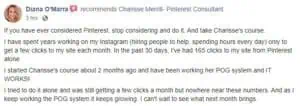
Just like Diana—she spent 3 months focusing on Instagram to bring traffic to her makeup class. She paid for a VA to help her and saw about 30 website visits a month, but not a single dime in return. Then, she learned how to use Pinterest the right way… she hit 100 website visits in 3 months—on her own, and started getting inquiries about her classes!
In this post, I’m going to break it down simply so you can finally “get” Pinterest. We’ll cover what Pinterest really is, how it works, and how you can start using it to bring the right people to your website.
Ready? Let’s jump in.
1. Pinterest Is Visual (But Not in the Way You Think)
Yes, Pinterest is visual—but it’s not just about posting pretty pictures and hoping for the best.
This is where so many people get tripped up.
On platforms like Facebook or Instagram, a beautiful image can be enough to get attention. A scenic beach photo? That might get likes and comments.
But on Pinterest, that same image on its own doesn’t give Pinterest—or your audience—enough information.
Because Pinterest doesn’t just see your image… it actually reads it.
It’s scanning for clues:
- What is this about?
- Who is this for?
- When should this show up in search results?
So if you post a plain image of a beach, Pinterest might recognize “beach”… but that’s it. It has no idea if your content is about travel tips, family activities, packing lists, or something else entirely.
Now compare that to an image of a beach with a text overlay that says: “10 Tips for Taking Kids to the Beach”
Suddenly, everything changes.
Now Pinterest knows:
- This is for parents
- It’s about kids
- It’s helpful, practical advice
- It should show up when someone searches for family beach tips
And just as important? Your ideal client knows that too—instantly.
Because here’s what really stops the scroll on Pinterest:
👉 Clear, specific text on your image
Your audience is moving quickly. They’re scanning, not reading every word. So your pin needs to answer one simple question right away:
“Is this for me?”
That’s why your pin design matters so much. Not in a complicated, graphic-designer way—but in a clear, strategic way.
Pinterest doesn’t just read the text on your image—it connects it with: Your pin title. Your description. Your linked content (your blog or website).
All of this works together to help Pinterest understand your content and decide who to show it to.
Inside the Pinterest Organic Growth Academy, I show you exactly how to:
- Create scroll-stopping pin designs
- Use wording that speaks directly to your audience
- Help Pinterest understand your content so it can show it to the right people
Because when Pinterest knows who you help, it can finally connect you with them.
2. Pinterest Is a Search Engine
This is the shift that changes everything.
Pinterest is not social media—it’s a search engine.
And once you really understand that, your whole approach becomes simpler and more effective.
Think about how people actually use Pinterest…
They’re not scrolling to see what their friends are up to, and they’re not looking for entertainment in the same way they do on TikTok.
They’re there with a purpose… planning a birthday party, a new business idea, a remodel, or a new routine or goal.
Your audience is showing up thinking:
👉 “I need ideas.”
👉 “I need help.”
👉 “I’m trying to figure this out.”
And that’s powerful—because it means they’re already looking for what you offer.
But here’s where most people get stuck…
They treat Pinterest like content creation rather than content connection.
They ask:
“What should I post today?”
Instead of asking:
“What is my ideal client already searching for?”
That one shift changes everything.
Because Pinterest’s job is simple:
👉 Match what people are searching for with the best, most relevant content.
So your job isn’t to create more content—it’s to create the right content.
This is where keywords come in.
Keywords are the exact words and phrases your ideal client is typing into Pinterest.
For example, your audience probably isn’t searching:
“Ways to improve my business”
They’re searching:
- “How to get more website traffic.”
- “Pinterest marketing for beginners”
- “How to sell digital products online.”
When your content uses those exact phrases, Pinterest can finally connect you with the right people.
And here’s the part that makes Pinterest so different (and so powerful):
👉 Your content doesn’t disappear after 24 hours.
On Instagram, a post might get attention for a day… maybe two. On Pinterest? Your pin can show up in search results for months—even years after you post it.
That means the work you do today keeps working for you long after you’ve moved on.
This is how you start building consistent traffic instead of chasing it.
Inside the Pinterest Organic Growth Academy, this is where we go deeper.
Because finding the right keywords isn’t about guessing—it’s about knowing what your audience is already looking for.
I show you:
- How to find high-impact keywords in your niche
- How to choose topics that actually bring traffic
- How to map your content so your pins support your offers and services
So instead of throwing content out there and hoping it works…
You’re creating a system that brings the right people to your website again and again.
And that’s when Pinterest starts to feel a lot less confusing—and a lot more predictable.
3. Pinterest Is Not Social
This is where so many of my clients finally exhale…
Because Pinterest does not work like Facebook, Instagram, or TikTok. It is NOT social (aka perfect for introverts).
There’s no pressure to:
- Get likes
- Start conversations
- Reply to comments
- Post at the “perfect” time
And if you’ve been trying to treat Pinterest like those platforms, no wonder it’s felt confusing.
Because Pinterest isn’t built for interaction—it’s built for ACTION.
People aren’t there to chat. They’re there to find something useful and either click or save it.
That’s it.
So instead of asking:
“How do I get more engagement?”
You want to start asking:
“How do I get more clicks?”
Because on Pinterest, the wins look different:
- Someone clicks your pin and lands on your website
- Someone saves your content to come back later
- Someone finds your content weeks (or months) after you posted it
That’s what Pinterest is designed to do—send people off the platform and onto your content.
And here’s the best part… You don’t have to be “on” all the time to make that happen.
Instead, Pinterest rewards consistency and quality over time.
It’s looking for creators and business owners who:
- Share helpful, relevant content
- Show up regularly (not perfectly)
- Create pins that lead somewhere valuable
That means you can take a much steadier, repeatable approach.
You’re not chasing attention—you’re building a system.
Inside the Pinterest Organic Growth Academy, this is exactly what we focus on—creating a plan that actually fits into your life and business.
I walk you through:
- How often to pin (without overdoing it)
- What types of pins perform best for traffic
- How to create a simple workflow you can stick with
So instead of wondering if you’re doing it “right”… You have a clear, repeatable way to show up and grow.
And this is where things really start to click.
Because when you stop treating Pinterest like social media, you stop chasing engagement—and start building real, lasting traffic to your website.
“This Sounds Complicated…”
You might be thinking…
“Okay, but this still sounds like a lot. I don’t know if I can learn a search engine.”
Totally fair.
But here’s the truth—it’s actually simpler than what you’re doing on social media right now.
You don’t have to worry about:
- Posting at the right time
- Keeping up with trends
- Getting comments or engagement
Instead, you follow a set of best practices—and let Pinterest do what it does best: connect people with what they’re searching for.
You don’t need a huge audience or to go viral.
You can be a small fish in a big ocean—and still get steady, meaningful traffic to your website.
It’s Simpler Than You Thought
Pinterest works differently—and that’s exactly why it’s so powerful.
Here’s what to remember:
- Pinterest is visual, but your text matters most
- Pinterest is a search engine, not social media
- Pinterest rewards consistency and helpful content, not engagement
When you understand these three things, everything becomes clearer.
You stop procrastinating.
You start taking action.
And you begin building a traffic system that actually works for your business.
Imagine waking up to new people finding your content every day—without constantly posting or showing up online.
That’s what’s possible here.
Ready to Get Started?
If you’re ready to stop guessing and finally understand how to use Pinterest to grow your traffic, leads, and sales…
👉 Sign up for the Pinterest Organic Growth Academy today.
It’s a self-paced course designed specifically for women with websites who are ready to grow—without the overwhelm.
You’ll learn exactly how to:
- Set up your Pinterest the right way
- Create content that gets found
- Turn your pins into consistent website traffic
You don’t have to figure this out alone.
Let’s make Pinterest work for you.
